Gold Price Recovery and Economic Outlook

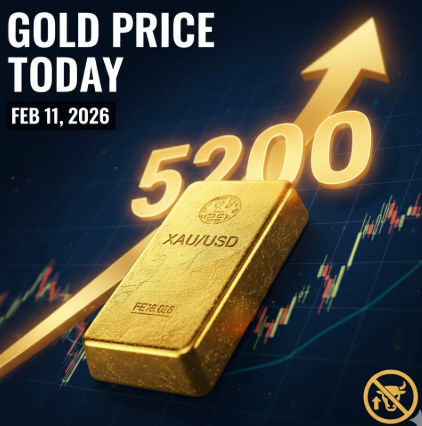
Key Drivers Behind Today’s Gold Price Surge Gold’s 2.07% jump today isn't just a random fluctuation; it is a direct response to several critical economic indicators:
Cooling US Labor Market: Recent data shows US job cuts hit 108.4K in January, the highest for that month since 2009. Coupled with ADP payrolls missing forecasts, investors are increasingly betting on Federal Reserve interest rate cuts, potentially starting as early as June.
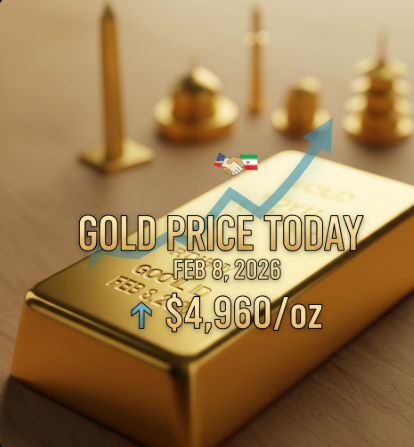
The "Safe-Haven" Appeal: While the White House signaled a preference for diplomacy regarding Iran, the underlying geopolitical friction continues to drive investors toward "hard assets." Analysts from Bank of America and ICBC Standard Bank remain bullish, with some even forecasting gold could reach $6,000 to $7,000 per ounce later this year.
Dollar and Yield Dynamics: The US Dollar Index (DXY) has remained somewhat firm at 97.81, but the longer-term outlook for 2026 suggests continued depreciation, which historically makes gold more attractive to international buyers.
2026 Economic News: A Snapshot
Beyond the gold vault, the broader economy is navigating a complex landscape:
Inflation Watch: US inflation remains stable at approximately 2.7%, with core inflation at 2.6%. Markets are closely watching for the January CPI report due next week.
Global Resilience: The Malaysian economy is outperforming expectations with a 4.6% growth forecast for 2026, driven by the global "AI tech upcycle."
Market Volatility: Metals like Silver (+4.78%) and Copper are also seeing sharp moves as the market recalibrates following the "January Madness" sell-off.
Investor Takeaway: Is Now the Time to Buy?
While gold remains below its all-time record of $5,608, today's recovery suggests that the "structural bull cycle" is far from over. Technical analysis shows short-term support holding strong between $4,740 and $4,772. As long as the market stays above these levels, the path toward the next target of $5,090 remains open.
Note: Gold is a classic hedge against inflation and geopolitical risk. However, with current volatility, many traders are moving to "break-even" stops to protect recent gains.