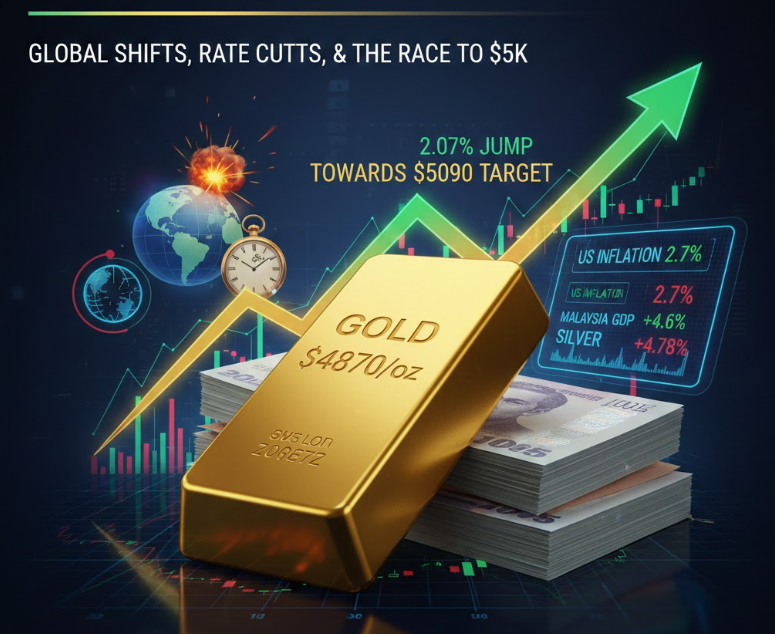
Gold Price Today: Market Hits $4,950 as Economic Softening Sparks Bullion Rebound
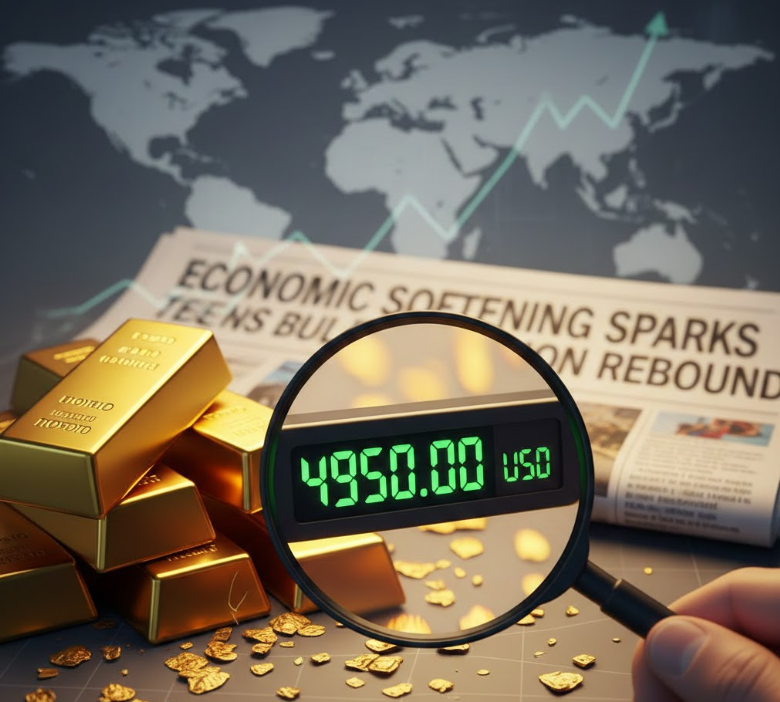
The global financial landscape is shifting. After a volatile start to the year, gold prices have staged a significant recovery this week, reclaiming the $4,950 per ounce level. As investors digest a cocktail of cooling US labor data, steady interest rates, and evolving geopolitical narratives, the "yellow metal" is once again proving its mettle as a primary portfolio hedge.
In this market update, we break down today’s gold rates, the economic catalysts driving the surge, and what the experts are forecasting for the remainder of 2026.
1. Today’s Gold Price Performance (February 7, 2026)
Following a 1.85% jump on Friday, gold futures (GCG26) have stabilized near record territories. In the international spot market, gold climbed to $4,887.30, successfully bouncing back from earlier weekly lows of $4,654.
Gold Rates in India (Per 10 Grams)
Domestic prices in India have seen a slight moderation from the absolute peaks of late January but remain elevated due to consistent wedding season demand and global cues:
24-Karat Gold: ₹1,53,700
22-Karat Gold: ₹1,40,900
18-Karat Gold: ₹1,15,300
2. Key Economic Drivers: Why is Gold Rising?
Several macroeconomic factors have converged this week to provide a "perfect storm" for bullion bulls:
Weakening US Labor Market: Recent data showed weekly initial jobless claims rising to 231,000, with job cuts hitting their highest January levels since 2009. This "softening" has fueled expectations that the Federal Reserve may begin easing rates sooner than previously anticipated.
Central Bank Accumulation: Central banks, particularly in emerging markets, continue to be "conviction buyers." Reports suggest institutions like the PBOC and others are still on track to purchase roughly 800 tonnes of gold in 2026.
Geopolitical "Cooling" vs. Uncertainty: While recent talks between the US and Europe regarding Greenland and NATO have eased immediate trade war fears, the underlying shift toward a multi-polar world keeps the "risk premium" on gold high.
The "Trump Tariff" Effect: Ongoing discussions around US trade policy continue to fluctuate, creating a volatile environment where investors prefer the safety of physical assets.
3. 2026 Gold Price Forecast: Will We See $5,000?
Wall Street remains divided but lean heavily bullish. Major institutions have updated their 2026 targets:
Institution | 2026 Target (Per Ounce) | Key Catalyst |
J.P. Morgan | $5,055 | Private wealth reallocation to 4.6% |
Goldman Sachs | $5,400 | Strong structural demand & Fed easing |
Bank of America | $5,000 | Falling supply and rising mining costs |
UBP | $5,200 | Sovereign debt concerns & inflation |
Pro Tip: Analysts suggest that every 100 tonnes of net purchases by central banks corresponds to a roughly 1.7% to 2% rise in the gold price.
4. Broad Economic Outlook
Beyond gold, the global economy is entering a "normalization" phase. UN Trade and Development (UNCTAD) projects global growth to remain subdued at 2.6% for 2026.
US Growth: Projected to slow to 1.5%.
Silver & Copper: Following gold's lead, silver has seen a massive 145% year-on-year increase, while copper maintains a bullish trend due to the green energy transition.
Interest Rates: The Reserve Bank of India (RBI) recently held the repo rate at 5.25%, signaling a "wait and watch" approach that mirrors many global central banks.
Conclusion: Is Now the Time to Buy?
With gold trading near its 52-week high of $5,586, the current price of $4,951 represents a strategic entry point for those who missed the January rally. While profit-booking may cause short-term dips, the structural drivers—central bank buying, sovereign debt issues, and cooling labor markets—suggest that the bull run has more room to run.
Stay Ahead of the Market: Gold is no longer just a "crisis asset"; in 2026, it has become a core component of the modern diversified portfolio.