Gold Prices Surge as US-Iran War Erupts: 2026 Economic Impact Report

Gold Prices Surge as US-Iran War Erupts: 2026 Economic Impact Report
The global financial landscape shifted overnight. On Saturday, February 28, 2026, the United States and Israel launched a series of coordinated strikes against Iranian military and nuclear infrastructure, codenamed "Operation Epic Fury." In response, Iran’s Revolutionary Guard (IRGC) has retaliated with missile strikes against US bases and regional targets.
As the fog of war descends, investors are abandoning riskier assets, causing Gold (XAU) to test unprecedented levels.
1. Gold Market Today: A Historic Breakout
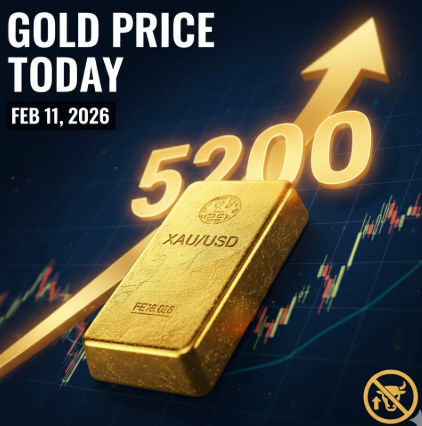
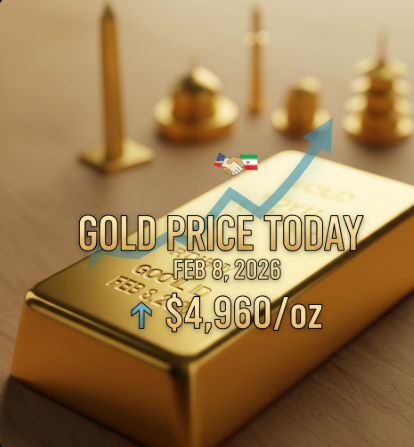
Gold prices have supercharged their upward momentum. After trading near $5,236 per ounce yesterday, the onset of direct military conflict has pushed bullion toward the $5,300–$5,500 range in some international markets.
Spot Gold: Trading firmly above $5,280/oz.
The "War Premium": Analysts estimate that at least 15-20% of current gold value is a direct "geopolitical risk premium" as investors hedge against a wider Middle East conflagration.
Future Outlook: Major institutions like Bank of America and JPMorgan have revised their 2026 targets, with some analysts now eyeing $6,000/oz if the conflict lasts more than a few weeks.
2. The Economic Fallout: Why This Time is Different
Unlike previous "shadow wars," the 2026 conflict involves direct strikes on the Iranian mainland and the potential closure of critical maritime routes.
The Energy Shock
Oil prices have reacted violently. Reports of explosions near the port of Bushehr and threats to the Strait of Hormuz have sent Brent Crude futures soaring. Any sustained disruption to this passage—where 20% of the world's oil flows—could trigger a global recessionary wave and hyperinflation in energy-dependent sectors.
US Economic Pressures
Domestically, the US is battling a "sticky inflation" problem.
PPI Data: Recent Producer Price Index (PPI) data showed wholesale inflation at 2.9%, higher than expected.
Federal Reserve Dilemma: Typically, war requires increased government spending (fiscal expansion), which is inflationary. The Fed now faces the impossible task of deciding whether to raise rates to fight inflation or lower them to support a war-strained economy.
3. Investing During the US-Iran Conflict
For those looking to protect their portfolios, the 2026 "War Economy" requires a strategic shift.
Safe-Havens: Gold and Silver remain the primary choices. Silver (XAG) has actually outperformed gold recently, hitting $94/oz due to its dual role as an industrial and precious metal.
USD Strength: Surprisingly, the Dollar has seen a "safe-haven" bounce despite the war involvement, as the global market seeks the liquidity of the world’s reserve currency.
Rotation out of Tech: We are seeing a massive rotation out of high-growth AI equities into long-duration Treasuries and commodities.
Market Note: "The objective is regime change, which means this isn't a flash-in-the-pan strike. This is a sustained campaign that could redefine global trade for the next decade." — Market Analyst Insight