Gold’s 2026 Reversal: Why the “Safe Haven” Just Hit a Historic $800 Flash Crash

February 1, 2026 — The gold market has just delivered a masterclass in volatility. After a relentless bull run that saw bullion smash through a record $5,600 per ounce on January 29, the metal has suffered its largest single-day loss in history.
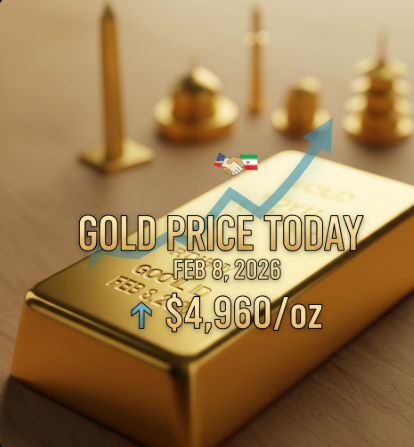
As of this morning, gold is struggling to find a floor, hovering between $4,840 and $4,900. If you’re an investor, the question isn't just "what happened?"—it's "is the rally over?" Here is the essential breakdown of the February 2026 Gold Crash.
The "Warsh Effect": What Triggered the Sell-Off?
The primary catalyst for this week's $800 price swing was a double-blow of political and monetary shifts in the United States.
The Hawkish Pivot: President Trump’s nomination of Kevin Warsh as the next Federal Reserve Chair sent a clear signal to markets. Warsh, a known critic of "easy money" policies, is expected to champion a tighter balance sheet and higher interest rates. This immediately boosted the U.S. Dollar Index (DXY), making gold more expensive for global buyers.
Profit-Taking Panic: After gold surged nearly 30% in a single month, the market was "overbought." Once the $5,600 resistance level held firm, a wave of automated sell orders (circuit breakers) was triggered, turning a standard correction into a full-blown flash crash.
Silver’s Collapse: Silver followed gold off the cliff, plummeting from nearly $120 to below $85 per ounce—a staggering 27% drop in 48 hours.
Global Impact: From Egypt to India
The volatility hasn't been limited to Wall Street.
Egypt: Local prices for 21-carat gold dropped by roughly EGP 600 per gram in a single week, as the domestic market rushed to realign with the global spot price.
Vietnam: SJC gold bars saw a dramatic decrease of over 9 million VND, catching retail buyers off-guard.
India: MCX futures hit lower circuits as investors braced for the upcoming Union Budget and potential changes to import duties.
2026 Gold Forecast: Buy the Dip or Wait?
Despite the "sentiment shock," institutional analysts suggest the structural bull case for gold remains intact for the rest of 2026.
Key Support Levels to Watch:
$4,800: The critical psychological and technical floor. If gold holds here, the long-term uptrend remains valid.
$4,600: The "Deep Value" zone. Analysts at Forex.com note that losses must be limited to this area for the 2026 bull cycle to stay healthy.
$5,200: The immediate resistance. Gold needs a weekly close above this mark to regain its "parabolic" momentum.
Institution | 2026 Year-End Target | Sentiment |
Goldman Sachs | $5,400 | Constructive |
J.P. Morgan | $5,055 | Bullish |
UBS | $5,200 | Steady |
AI Models | $6,800+ | Extreme |
The Verdict: A Necessary "Cooling Off"
Most experts agree that gold was in a "blow-off top" phase. This crash has cleared out speculative "weak hands," allowing long-term buyers like central banks (who are still purchasing ~800 tonnes a year) to re-enter at better prices.
Pro Tip: For retail investors, experts recommend staggered buying (SIP) rather than trying to time the bottom of this historic correction